

Why Most Google Ads Campaigns Lose Money
Whenever you’re talking about the golden standard in digital advertising, the only thing that pops up in the minds of users is Google Ads, this tool is giving businesses a direct line to customers with high purchase intent. But as years passed, this tool started its evolution and now in 2026, Google’s new Tag Gateway, AW-tag, and enhanced AI campaign automation are evolving into full-scale adoption.
Exactly this year the industry shifts from experimentation to execution. Staying ahead of these Google Ads trends and emerging ad technologies will separate the advertisers who thrive from those who fall behind. Google Ads is set to be more automated, more competitive, and more expensive than ever, and as small and mid-size business owners waste 25–40% on their Google Ads, they need to take into consideration the poor setup and weak optimization ,and keep up with the ever-changing trends.
Today, we are going to announce the top reasons why most of your current Google Ads Campaigns are failing and how to fix it accordingly.
Blind Trust (Without Quality Data) In AI Bidding Leads To Ad Failure
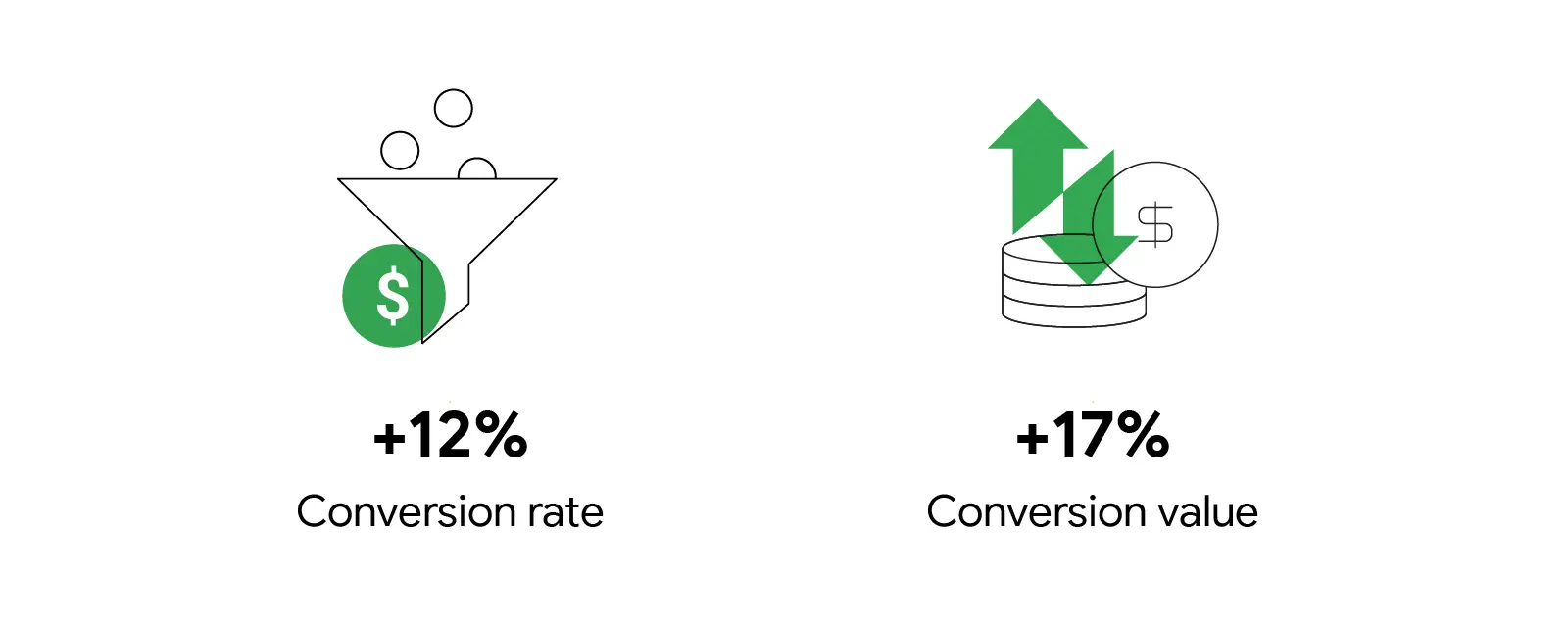
Data quality isn’t about “no typos in a spreadsheet.” If business owners want to have the most productive ad campaigns of their niche, they need to help AI with its trusted data. AI is a learner and you’re the teacher. So, before running an ad take into notice the following problems:
It’s about giving AI a trusted environment to learn from.
- Turning AI on before doing the data homework-Don’t let your marketing team enable Smart Bidding or Performance Max without first validating their conversion setup.In this case,the algorithm then learns from incomplete or inaccurate events-and optimizes based on false signals. Quick Fix-Running a quick data readiness audit before any campaign is a must.
- Data should be usable:Raw data across multiple platforms isn’t automatically usable. And if your business data on Google Ads, Meta Ads, and CRM data are structured differently, cross-channel analysis becomes nearly impossible. Quick fix-You need to centralize and harmonize your data under one layer, so ad, CRM, and cost data will be turned into an analysis-ready structure.
- Solely relying on dashboard stats is a No-no: Most marketing teams rely solely on platform dashboards to evaluate Smart Bidding performance. But for the stable performance, you need to compare it to first-party data also for the validation.
Making data your primary source of trust and automating every bit of reporting eases your ad campaigns implementation. We highly suggest running a data quality audit before increasing or decreasing your ad budgets.
Low-Quality Traffic Because of Broad Match & Missing Negative Keywords
Currently, Google heavily pushes broad match, auto-applied recommendations and search expansion and while it increases reach,but also massively increases irrelevant clicks. So, that means you are paying currently for traffic that will never convert, because of the mess of the current search regulations.
So, in order to get the proper traffic in such a messy atmosphere in digital world, business owners should take into consideration the following moments in new Google Ads patterns:
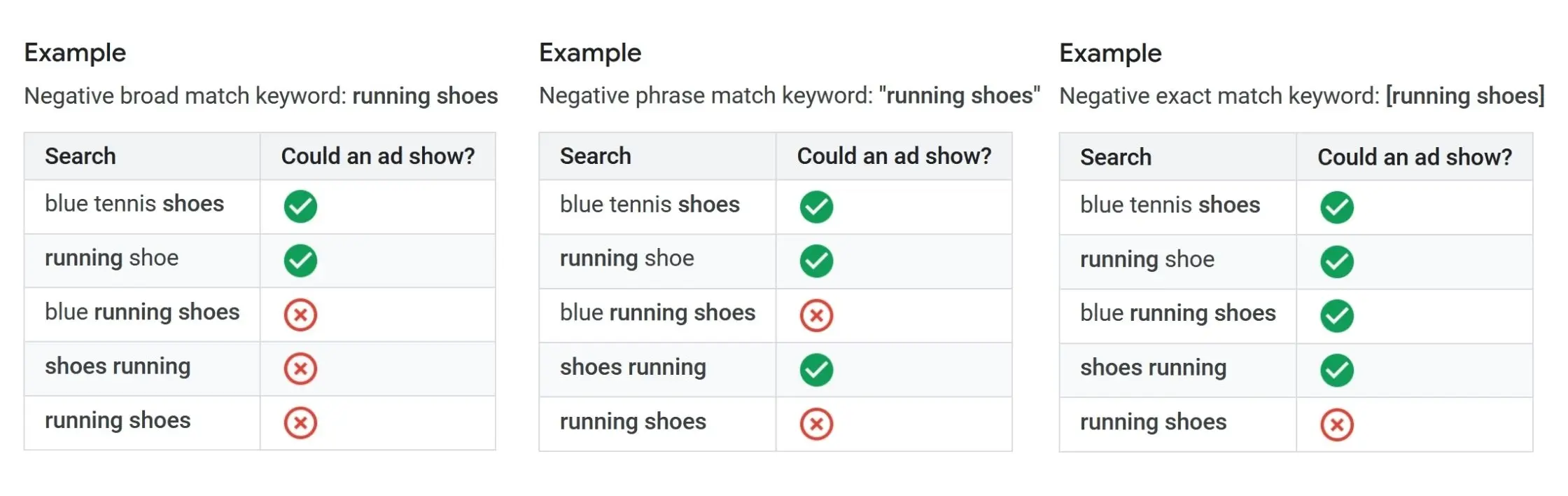
- Get full picture of Match Types: Broad vs Phrase vs Exact-As Google functions completely differently when it comes to searches, you need to learn different tactics of it. Let’s break it down: broad match-This is the most flexible match type. It shows your ads for any search Google thinks is relevant to your keyword. For example: if you’re the owner of the ‘mens shoes’, your ad might show the following searches:“footwear for guys”,“men’s running sneakers”,“comfortable shoes for men”.
-
- Phrase Match-this type of search only shows your ad when searches include your keyword or close variants,the words appear in the same order. For example: “best mens shoes”,“mens shoes on sale” or “cheap mens shoes near me”.
- Exact Match-this tool is the most important tool that you need to use carefully as this one only focuses on showing your ad that match your keyword almost exactly and includes very close meaning variations, so your ad’ll show for “mens shoes”,“men’s shoes” and “shoes for men”.
- Don’t forget about negative keywords-A negative keyword in online advertising is a word or phrase that stops your ad from showing up when someone searches for that term. So, negative keywords tell the platform when not to show your ad. If you’re not using them, your carefully made ads might be seen by a huge group of people who aren’t really interested, which wastes your budget and makes your ads less effective.
- Use negative keywords carefully-when a user types something into a search engine or looks at content on a website, the ad platform first checks what they typed or what the page is about against your regular keywords. And before your ad even thinks about showing up, it checks that same search or content against your negative keyword list. If there’s a match with a negative keyword, your ad just won’t show.
As you can see exactly this part is very challenging for the brand to implement straightforward, because of the ever-changing search preferences. Intactdia will help you to compile the best keyword strategies for your business right after the discovery call, so you can make sure that no money has been wasted on the ads that won’t be bringing you any results.
Sending Paid Traffic to Ineffective Landing Pages
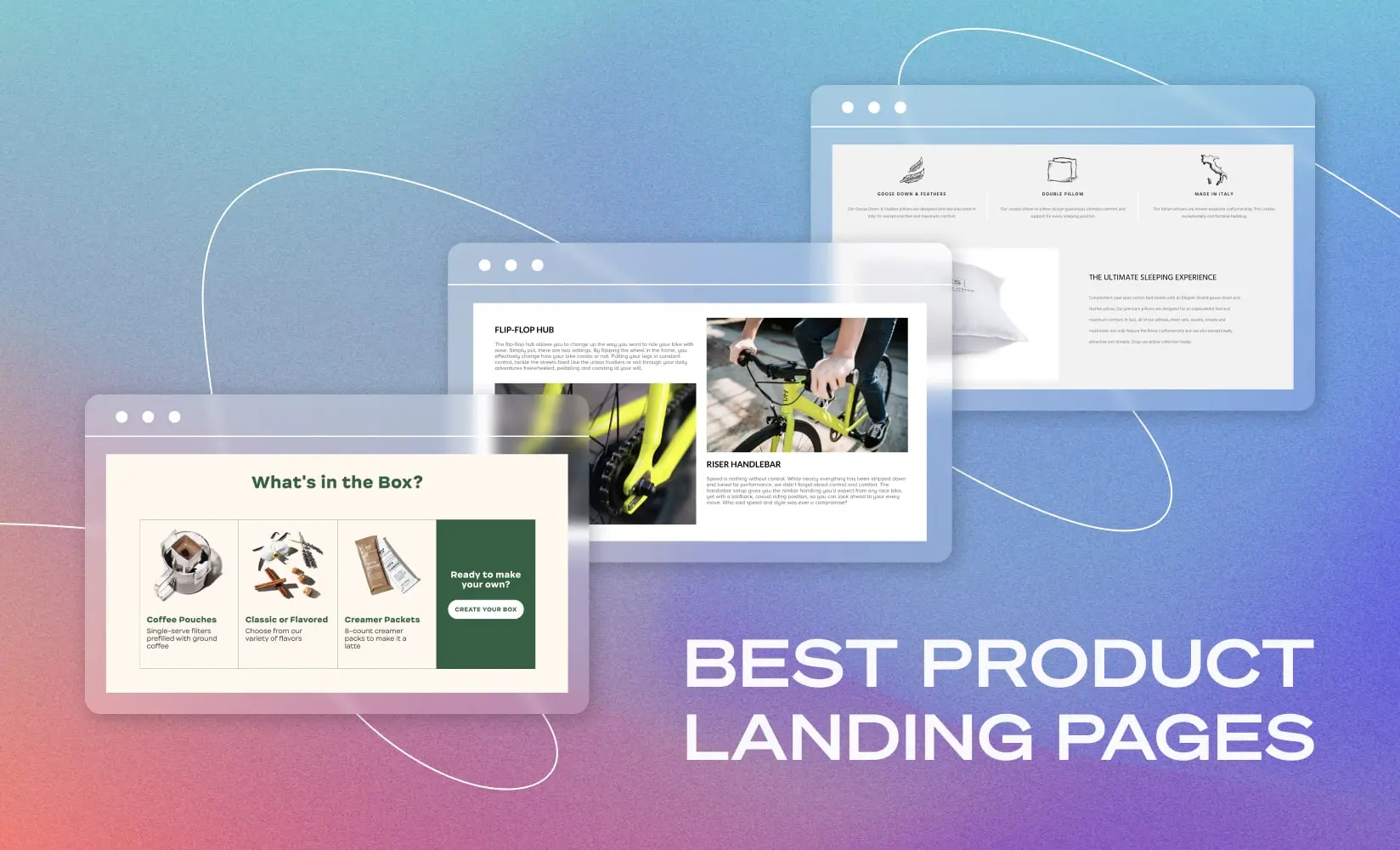
When business owners think about the paid Google Ads implementation for their website, they simply imagine clicking to a smaller homepage. We have to disagree with it, maybe you can switch later to the simple homepage mode, but as your website is under heavy advertising period, the homepage needs to look technically stunning and ready for the consumption by the potential clients. As a business owner, you need to understand the following moments about the homepage:
- Landing page is not here to talk about the history of your company, it is about solving client’s issue–A landing page has exactly three jobs: 1)confirm to the visitor they’re in the right place, 2)clarify what you’re offering and why it matters and 3)make the next step obvious and safe. So if one of the mentioned moments fails, then, the whole Google Ad campaign will not bring you any results.
- Your landing page is the appointed diplomat of your business-They are designed to orient, not convert. The landing page has one audience, one intent, one problem, one action.But don’t confuse homepage to landing page!After clicking on the landing page, customers will be transferred to a homepage and the page is asking a stranger to figure out what matters instead of deciding it for them, then you’ll lose paid traffic leads,as most people won’t do that work for you.
- The homepage of the website needs to be the continuation of the landing page-People are clicking on your landing page, because of the fact that they need the service that you indicated there, but if they face completely another direction after the ad, then automatically they leave your website. Your business should have One primary action, One clear outcome, One reason to act now.
Landing pages fail because they inherit expectations they were never meant to carry. An effective landing page shouldn’t explain the whole company, justify every decision, satisfy every audience, and still somehow convert a stranger in under ten seconds, because it’s the job of the homepage.
In 2026, your Google Ads should be ready to present clear data to the AI, route the right traffic and prepare a highly convertible landing page of your business.Fixing just these three issues can often turn a losing campaign into a profitable one-without increasing budget.