

How to Build a Marketing Dashboard That Actually Drives Decisions
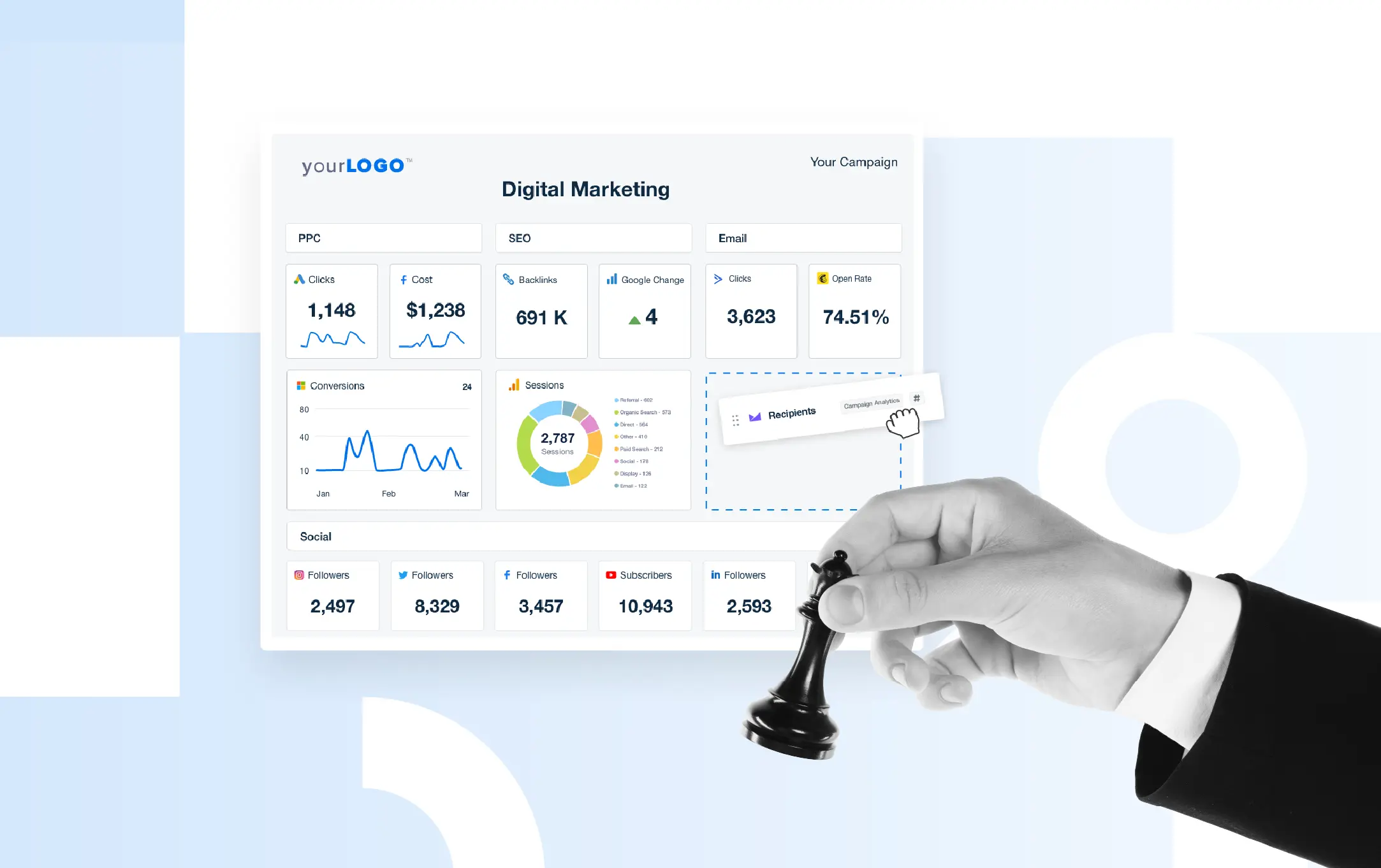
As you’re starting to deal with huge amounts of data, the need for a well-organized marketing dashboard is becoming real. A marketing dashboard is a tool that makes raw data easier to interpret and draw conclusions from. In other words, it is a collection of interactive graphs that consolidate metrics and key performance indicators (KPIs) from multiple sources, such as advertising or e-commerce platforms.
Dashboards serve several purposes: 1)A high-level marketing analytics dashboard might give CMOs a 10,000-foot view of ROI, while a more specific digital marketing dashboard, such as an SEO dashboard, might show traffic trends, whereas an email marketing dashboard might shine a light on open rates.Your company can have multiple marketing KPI dashboards, from a web analytics dashboard to a product marketing dashboard, to ensure you impact the business goals executives care about.
In today’s post, we shall help you to design your first marketing dashboard that will help you to understand performance, identify trends, and make strategic decisions for your business.
Let’s Build A Marketing Dashboard
Choose KPIs
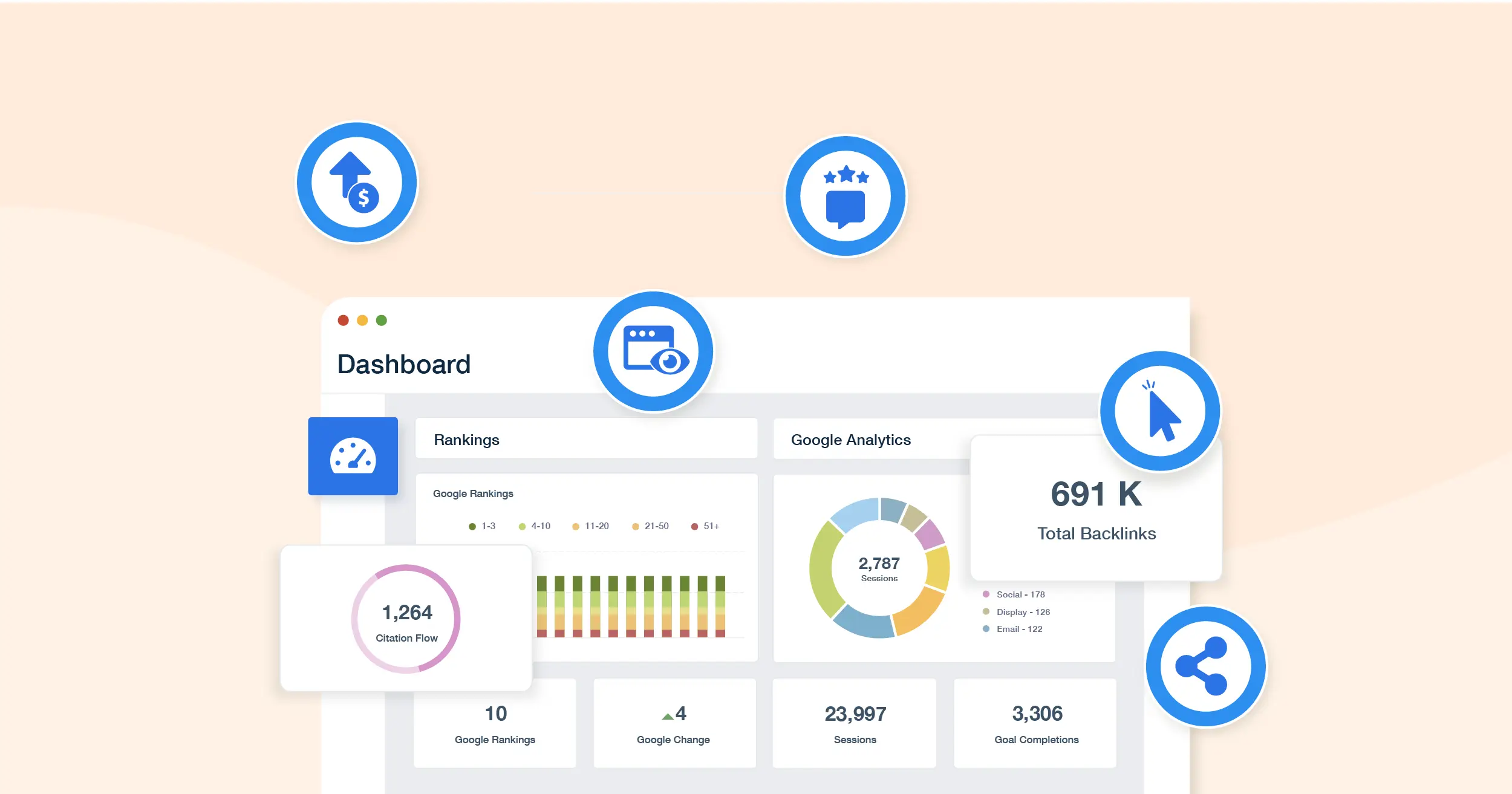
Right after you set the business goals, it’s time to create clear KPIs for your business performance.Well organized KPIs
- Make it easier to take decisions based on clear data
- Can identify opportunities and problems more easily
- Regular feedback motivates and guides teams
It is highly recommended to choose a limited number of indicators, but to stick to the essential KPIs, rather than having too many, which would be detrimental to the quality of the decision-making process. But beware that certain indicators (e.g. number of views, likes or subscribers on social networks) are not correlated with the marketing objective. For example, on LinkedIn, an emotional post can generate many views, but without any effect on lead generation.
Practical solution from Intactdia:
- Limit KPIs to 5–10 core indicators
- Focus on actionable metrics
- Align KPIs with business outcomes
The metrics that can be definitely used in your marketing dashboard are:
- Customer acquisition cost (CAC)
- Conversion rate
- Return on marketing investment (ROMI)
- Website traffic quality
Collecting and processing data to turn information into insight
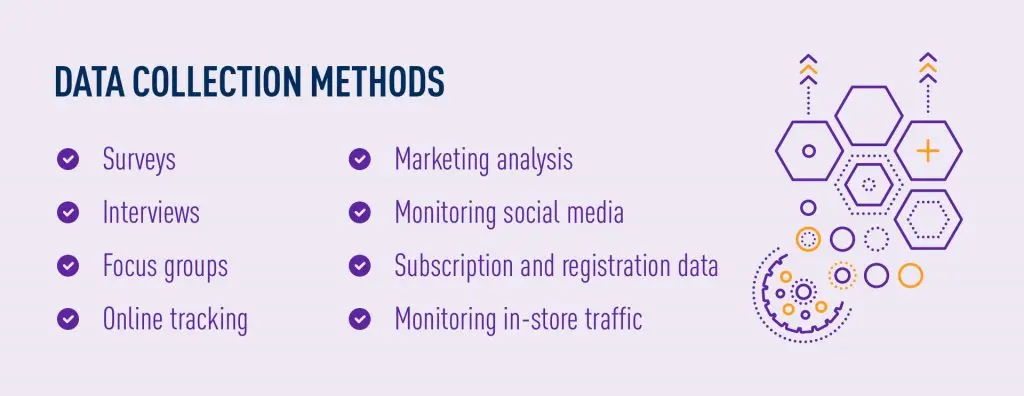
After you choose KPIs, it’s time to gather a dynamic tool based on reliable, up-to-date data. It is therefore essential to guarantee their quality. By using APIs you can export certain data automatically to the analysis tool. This ensures reliability and avoids tedious reporting. You need to regularly check the accuracy of the data, with that, data cleaning helps you identify misspelled, missing or erroneous data.
To gather data you need to use management software (e.g. Salesforce) that will guarantee the reliability of your data at every stage of collection, analysis and sharing with your employees.
It’s time to use AI for the straight-forward predictions
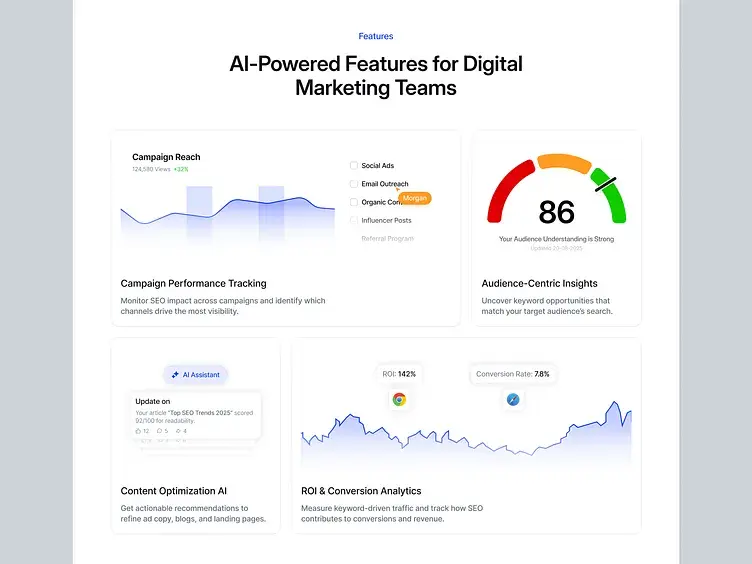
As soon as all the core components are ready, it is time to enable AI in order to identify emerging trends, predict future results and propose specific actions to optimize current campaigns. And with that your marketing dashboard turns from descriptive dashboard to a decision-making tool.
And with that, your business gets a digital performance monitor for adjusting your marketing strategies, evaluating the effectiveness of e-mail campaigns and optimizing future mailings, and providing visibility on sales performance to guide strategic decisions.