


Code, Creative, Commerce: The Three Pillars of Intactdia’s Digital Approach
A Strategic Approach to Building Digital Experiences
In today’s digital landscape, a successful online presence requires more than a well-designed website or a strong marketing campaign. Businesses need digital solutions that combine reliable technology, thoughtful design, and a clear understanding of commercial objectives. Each of these elements plays a different role, but their real value becomes apparent when they work together as part of a unified strategy.
At Intactdia, our approach is built around three fundamental pillars: Code, Creative, and Commerce. These principles shape how we approach web development, design digital experiences, and help businesses achieve their goals online. Code provides the technical foundation, Creative defines how people interact with and perceive a digital product, and Commerce ensures that every decision contributes to meaningful business outcomes.
This approach allows us to look beyond individual features and visual elements. Instead of treating a website as an isolated project, we consider its role within the broader business ecosystem, including customer acquisition, operational efficiency, brand positioning, and long-term growth. The objective is to build digital platforms that work reliably, communicate effectively, and deliver measurable value.
Code: Building a Reliable Foundation for Digital Growth
Every effective digital experience begins with a strong technical foundation. Behind every website, web application, and online platform is a combination of architecture, programming, integrations, and infrastructure that determines how well the solution performs in real-world conditions. At Intactdia, Code represents our commitment to developing secure, scalable, and high-performing digital solutions that can support complex business requirements.
A website may look impressive when it first launches, but its long-term value depends on much more than its appearance. It needs to load efficiently, function consistently across different devices, protect sensitive information, and accommodate changing business needs. As a company grows, its digital infrastructure may need to support additional services, more users, new integrations, and increasingly complex workflows. A system that was not designed with these requirements in mind can quickly become difficult and expensive to maintain.
This is why technical decisions should be made with both immediate requirements and future objectives in mind. Choosing an appropriate technology stack, establishing a maintainable architecture, implementing secure development practices, and optimizing performance all contribute to the long-term reliability of a digital platform.
Scalability is particularly important for businesses that expect their operations to expand. A well-structured platform should allow new features and capabilities to be introduced without requiring the entire system to be rebuilt. Similarly, maintainable code makes it easier for development teams to identify issues, implement improvements, and adapt the solution as requirements evolve.
Performance also has a direct influence on the user experience. Slow-loading pages, unreliable functionality, and technical errors create unnecessary friction and can undermine users’ confidence in a business. A technically sound platform reduces these risks while providing a stable environment for design, content, and marketing activities.
Our approach to Code is therefore not simply about writing software that works today. It is about creating the technical conditions for sustainable digital growth, ensuring that the platform can evolve alongside the business it supports.
Creative: Turning Brand Identity into Meaningful Experiences
Technology provides the foundation, but the way people experience a digital product determines how effectively it communicates and serves its purpose. This is where Creative comes in. At Intactdia, we see creative work as much more than visual aesthetics. It involves understanding user behavior, organizing information, designing intuitive interactions, and translating a brand’s identity into a coherent digital experience.
A visually attractive website does not automatically provide a good user experience. Visitors need to understand what a business offers, find relevant information without unnecessary effort, and recognize the next step they should take. If the interface is confusing or the content is difficult to navigate, even a technically advanced website can struggle to achieve its objectives.
Effective design begins with understanding the people who will use the platform. Their expectations, motivations, and browsing habits influence how information should be structured and how individual elements should function. Clear navigation, meaningful page layouts, consistent visual hierarchy, and accessible content help users move through the website naturally.
Brand identity is equally important. Colors, typography, imagery, language, and interaction patterns all contribute to how a business is perceived online. When these elements work together consistently, they help establish recognition and communicate the company’s character. The goal is not simply to make a website look different from its competitors, but to create an experience that reflects the brand while remaining useful to its audience.
Creative decisions also need to account for the context in which people access a website. Mobile users may interact with content differently from desktop users, while visitors arriving from search engines may have different expectations from those navigating directly to the homepage. Understanding these differences allows designers to create experiences that respond to actual user needs rather than relying entirely on assumptions.
At its core, Creative is about connecting business identity with human behavior. By combining thoughtful visual design with usability and clear communication, we aim to create digital experiences that are intuitive, consistent, and purposeful.
Commerce: Connecting Digital Strategy with Business Results
A digital platform should not exist solely to present information or demonstrate a company’s capabilities. It should also contribute to the business objectives it was created to support. Commerce represents this connection between digital strategy and measurable outcomes.
For some businesses, the primary objective may be generating qualified leads and encouraging potential customers to make enquiries. For others, success may depend on increasing online sales, improving customer engagement, or making purchasing processes more efficient. Each objective requires a different approach to website structure, functionality, content, and user interaction.
This is why commercial considerations should influence decisions throughout the development process rather than being introduced only after a website has been completed. Page layouts, calls to action, service descriptions, product information, and conversion paths all affect how effectively a platform supports business goals.
For example, a service-based company may need a website that clearly explains its expertise, demonstrates previous results, addresses common customer concerns, and makes it easy to request a consultation. An e-commerce business, on the other hand, may need an efficient product discovery process, clear product information, a straightforward checkout experience, and reliable payment functionality. Although both require strong technical implementation and thoughtful design, their commercial priorities are different.
Understanding these priorities helps ensure that development resources are directed toward features that provide genuine value. It also makes it easier to evaluate performance after launch. Rather than measuring success exclusively through visual quality or the number of completed features, businesses can assess whether the website is contributing to the outcomes that matter to them.
These outcomes may include qualified enquiries, completed purchases, conversion rates, customer retention, or reduced friction in the customer journey. The appropriate indicators depend on the business model and the purpose of the platform.
At Intactdia, Commerce means ensuring that technology and creative decisions remain connected to the practical realities of running a business. The objective is to build digital solutions that do more than function correctly: they should actively support the company’s commercial direction.
Digital Marketing: Connecting Businesses with the Right Audience
Even a well-developed website cannot achieve its full potential if the intended audience cannot find it. This is where digital marketing complements the three pillars, connecting a business’s digital presence with the people most likely to benefit from its products or services.
Digital marketing involves more than generating website traffic. The quality of that traffic, the relevance of the message, and the ability to turn interest into meaningful action are equally important. A campaign that attracts large numbers of visitors may still produce limited business value if those visitors have little interest in the company’s offering.
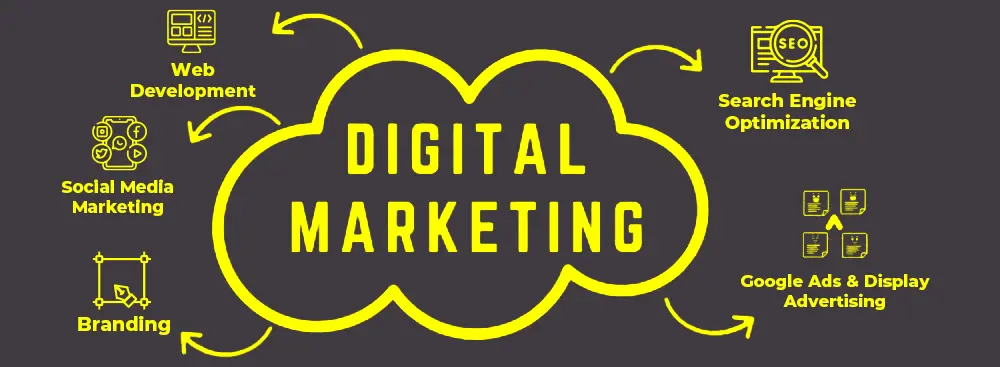
A more effective approach begins with understanding the target audience, identifying the channels through which potential customers search for information, and developing a strategy that aligns with their needs and decision-making process. Search engine optimization, content strategy, paid advertising, and other digital marketing activities can contribute to this process when they are selected and implemented according to the business’s objectives.
Search engine optimization helps businesses improve their visibility in relevant search results and attract users who are actively looking for particular products, services, or information. Content marketing supports this effort by answering questions, demonstrating expertise, and helping potential customers understand their options. Paid campaigns can provide additional reach and target specific audience segments, while performance analysis helps businesses understand which activities are generating meaningful results.
However, attracting visitors is only one part of the process. The website itself needs to support the expectations created by marketing campaigns. If an advertisement promises a specific solution but leads to a page that does not explain it clearly, the opportunity may be lost. Similarly, a successful search strategy can generate relevant traffic, but a confusing interface or an ineffective enquiry process can prevent that traffic from producing conversions.
This is why web development and digital marketing should not operate as completely separate activities. The website provides the destination for marketing efforts, while marketing insights help inform how the website should communicate, what content it should prioritize, and which audiences it should serve.
By aligning these activities, businesses can build a more consistent digital presence, attract qualified audiences, and create better opportunities for sustainable growth.
Bringing Code, Creative, and Commerce Together
The three pillars are most effective when they are considered as parts of the same process. Strong technology without thoughtful design can produce a platform that works but is difficult to use. Creative design without technical reliability can create an attractive experience that fails under real-world conditions. Both can fall short if the platform does not support a clear commercial objective.
Consider an e-commerce platform as an example. Its technical foundation needs to support reliable product management, secure transactions, and efficient performance. Its design needs to make products easy to discover, present information clearly, and provide a straightforward purchasing experience. Its commercial strategy needs to address customer expectations, remove unnecessary barriers to purchase, and measure whether the platform is generating the intended business results.
Each pillar contributes a different capability, but none operates in isolation. Technical architecture influences what can be implemented. Design determines how users experience those capabilities. Commercial objectives help establish which features and experiences deserve priority. Digital marketing then connects the platform with the right audiences and helps generate demand.
This interconnected approach also supports better decision-making throughout a project. Instead of asking only whether a feature can be developed or whether a design looks appealing, businesses can consider a broader set of questions: Does it solve a real problem? Does it improve the user experience? Is it technically sustainable? Does it contribute to a meaningful business objective?
These questions help maintain a clear direction from the initial planning stage through development, launch, and ongoing optimization.
Adapting to a Changing Digital Landscape
Technology, customer expectations, and digital marketing practices continue to evolve. New tools create opportunities to improve efficiency, introduce new functionality, and reach audiences in different ways. At the same time, businesses must decide which developments are genuinely useful and which are simply temporary trends.
The availability of new technology does not automatically make it the right choice for every project. A solution should be evaluated according to its practical value, implementation requirements, long-term maintainability, and alignment with business objectives. The same principle applies to design trends and marketing channels. Following a popular approach without considering the needs of the target audience can introduce unnecessary complexity without improving results.
Despite these changes, the fundamentals of effective digital experiences remain consistent. Technology needs to be reliable, design needs to be purposeful, and business outcomes need to remain clear. These principles provide a stable framework for evaluating new opportunities while allowing digital platforms to adapt as circumstances change.
For businesses, this means approaching digital transformation as an ongoing process rather than a one-time project. A newly launched website may establish the foundation, but continued analysis, maintenance, optimization, and strategic improvements help it remain relevant as the business grows.
At Intactdia, our focus is on combining these fundamentals with a practical understanding of each client’s requirements. Whether a business is launching a new digital product, modernizing an existing platform, or expanding its digital marketing activities, the starting point is the same: understanding the objective and identifying the right combination of technology, design, and strategy to achieve it.
Building Digital Solutions Around Your Business Goals
Every business has different priorities, challenges, and growth opportunities. Some need a new website that communicates their value more effectively. Others require a more advanced platform to support complex operations, improve customer interactions, or accommodate expansion. Some may already have the right digital infrastructure but need a more focused marketing strategy to reach relevant audiences.
There is no single solution that works equally well for every organization. The right approach depends on the business model, the audience, the existing infrastructure, and the outcomes the company wants to achieve. Understanding these factors is essential to developing a solution that delivers practical value rather than unnecessary complexity.
The Code, Creative, and Commerce framework provides a way to bring these considerations together. It connects technical quality with user experience and commercial purpose, helping ensure that each decision contributes to a broader objective. Digital marketing complements this framework by increasing visibility, attracting relevant audiences, and helping businesses make better use of their online presence.
At Intactdia, we believe effective digital work begins with a clear understanding of the problem and continues through thoughtful implementation and ongoing improvement. Whether you are planning a new project, upgrading an existing website, or looking for ways to strengthen your digital marketing performance, the first step is to define what success means for your business.
The digital landscape will continue to change, but the principles behind effective digital solutions remain clear: strong technology, thoughtful design, and measurable business impact. When these elements work together, a website becomes more than an online presence. It becomes a practical asset that supports business operations, strengthens customer relationships, and creates opportunities for long-term growth.