

The Psychology Behind High-Converting Websites
‘’People Don’t Convert Logically-They Convert Emotionally’’
In the 2020s business owners more and more face this reality-a beautiful website doesn’t guarantee results. You can invest hundreds of dollars in polished visuals, expecting conversions to follow, but in the end, only to find that visitors leave without taking action. But why? The answer is pretty simple and complicated at the same time, because web design lacks psychology. People interact with your business website on a subconscious level. That means colors evoke emotions,spacing influences perception.All of these elements and the way elements are arranged determines how quickly visitors find what they need.
These psychological factors are often invisible to the user, but they dictate whether potential customers stay, engage, or leave. It’s all about the psychological experience in your website and reaching the final point-purchasing the service.And exactly because of it, every business owner must align with how users think, behave, and process information.
High-converting websites are designed around how the human brain perceives information, not how businesses want to present it.And today, we showcase top psychological principles about website design that every brand owner should know
Cognitive Ease-Make The Decision Process Effortless
‘’The brain is set for easy functionality when it comes to shopping. When users have to think too much, they leave.’’
And here, you need to know that there’s no way to eliminate cognitive load entirely-plus it’s not a desirable action to take. After all, potential customers need to get some information, not only good design. And at this point we’re facing an intrinsic cognitive load, when users put the effort into absorbing that new information and keeping track of their own goals.
Your designers team should eliminate, or at least minimize, extraneous cognitive load: dozens of information, different font styles, too many visuals are among these unwanted elements. As you’re entering into psychological ease phase for your customers, the following high-converting approach is the top priority:
- Headlines should be informative, but at the same time easy to understand in seconds
- Use short sentences– they should be answering: What is this? Who is it for? Why should I care?
- Keep an eye on the visual hierarchy-Use no more than 2 font styles, branding colours and palettes.
Your top goal is to make users instantly understand what you offer and what to do next, your pages should be arrows to the purchasing section, only in that case they are most likely to go and make a purchase.
Trust Signals Should Follow The Whole User Experience
‘’Every conversion involves risk in the user’s mind-your website goal is to solve this trust issue with each click.’’
Let’s put ourselves into the shoes of a potential client who doesn’t know anything about your brand. When it comes to unknown brands/startups, trust signals have a tremendous impact on conversions. When no one knows your product or who you are as a company, the only thing that should build trust is the reference from a market leader (familiar names). If they don’t recognize your brand yet,you must ensure that at least something on the screen is familiar to your customer.
As you’re going to search for the best UI/UX Design team, Intactdia, with its decade long website design experience, provide with top trust signals you need to place onto your website:
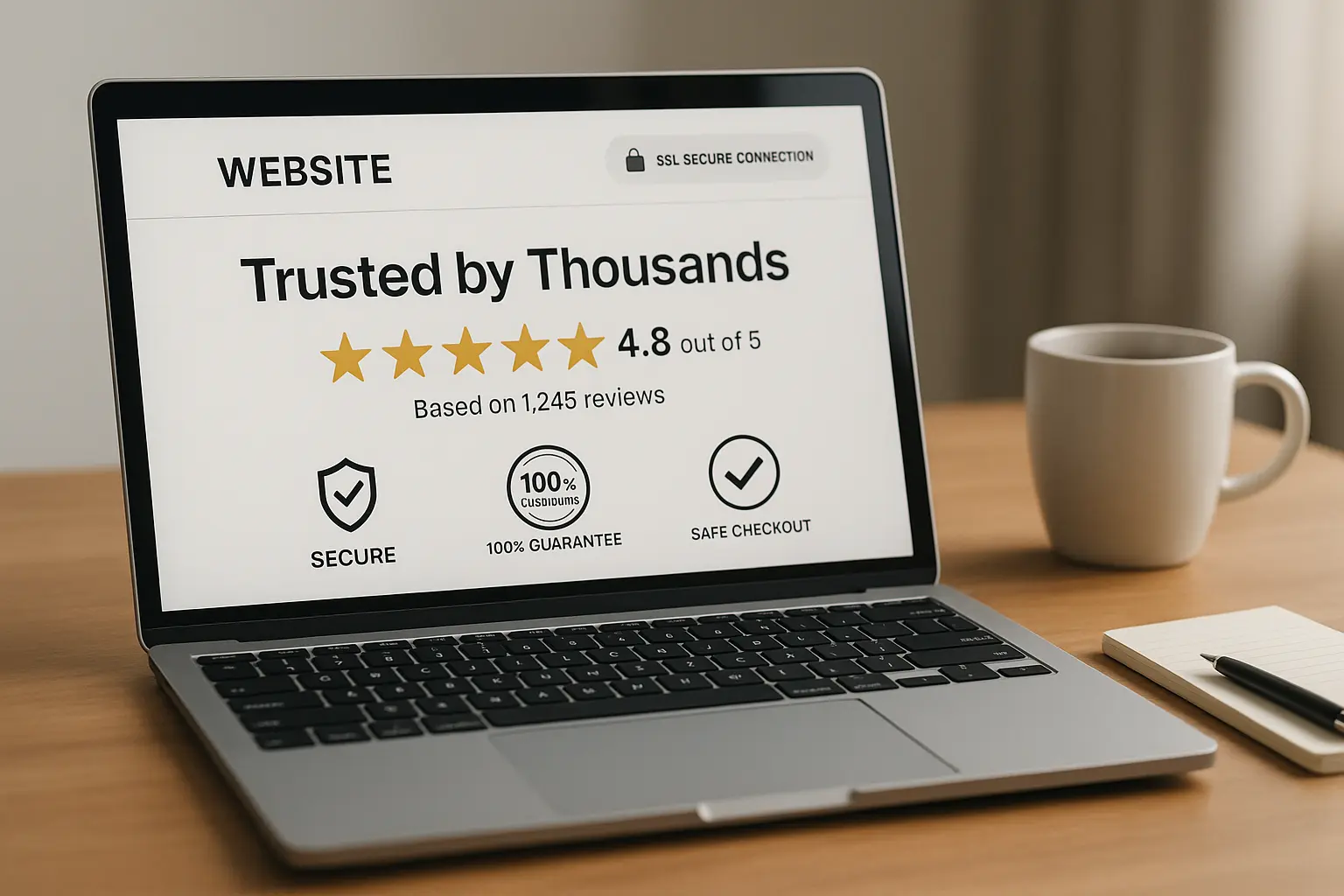
- Client logos, testimonials, and reviews-Do not place reviews in plain format, it doesn’t work anymore, customers want to see names, job titles, and logos to check the credibility. If you’re in the B2B sector, video testimonials or longer-form success stories can work extremely well, especially when it comes to having big corporations as your client.
- Contact information should be neat-If testimonials fill 50% of trust bar, contact information fills another 50%, there’s nothing more reassuring, when you see that the services that you’ll be purchasing in 2 minutes, have legitimate contact information, such as phone number and most importantly address. Intactdia team also add can live chat and security badges (SSL) for the full format user experience
- Secure payment indicators– payment options as important as contact information, your page should be showing the top options, such GooglePay,ApplePay, PayPal or the most popular payment system in your area on your page.It means your brand is verified by the global standards.
Your trust signals should carry one motto to the potential clients that are about to make a purchase-“others have done this safely before, so i can do it as well”
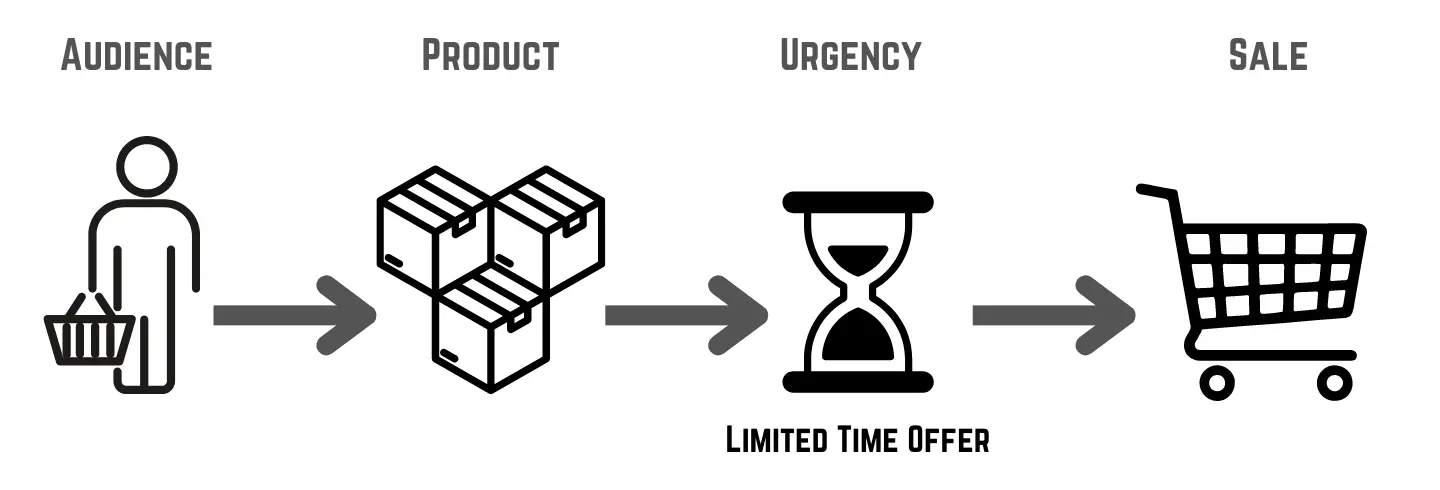
Polish The Urgency Psychology Of Your Website
‘’It’s less likely for clients to make a purchase straightaway, unless it’s something urgent’’
Human psychology is yet to be studied, but it’s already known that when a task is urgent, people are more likely to act on it. Interestingly, this is even applicable even if the urgency is artificially created. According to the results of five experiments in 2018 conducted by JCR,when unimportant tasks are characterized by spurious urgency (e.g. an illusion of expiration) people are more likely to perform them over more important tasks.
So, while your SEO and social media pages are creating urgency on its own track, as a business owner you should create an urgency straight via your website, which is quite complicated, but very much needed. While creating a feeling of urgency, you also need to take into consideration the ethical side:
- Setting deadlines-Sometimes restricting the time shoppers have is an effective way to trigger urgency to buy.But, of course, you shouldn’t be hurrying them too much.You can put the deadlines to delivery, discounts.
- Highlighting potential price increases-the threat of having to pay more tomorrow, can trigger people to buy today.While potential client overviewing the catalog of services, your small announcements displaying how many items are left at the advertised price can be an effective way of playing on people’s fear of paying more if they delay their purchase.Especially, it’s useful for the travel businesses.
- Flash sales-this tactic is urgency gold, because it covers three key psychological principles:loss aversion,scarcity and limited time.
Urgent psychology can be quite complicated, but if you have a well structured strategy about it, it can provide instant conversion, so keeping an eye on this principle is always important.
Business owners should remember that the best-performing websites don’t manipulate users-they respect how people think and decide, but at the same time can bring visibility to particular parts of its services according to the business ethics.