


Why Ranking #1 on Google Is Not Enough
In the room full of websites, Google will not look at yours, IF. Yes, business owners can start forgetting about landing on page one of Google was the finish line. Once business owners could hit that spot, the clicks would flow, and the traffic would follow. But, starting from 2020, we can say that ranking isn’t the end goal anymore- it’s barely the starting point.
Google made significant changes in its online functionalities. And it’s only not us that noticed it, but the rest of the global audience. It’s not about the blue links and simple search bar anymore.And the reason for it is AI. Google’s AI features are slowly replacing its iconic search bar and links, and if your brand isn’t being mentioned in those AI answers and searches, you’re basically invisible, even if you spent thousands of dollars on traditional SEO.
And the scary point is no one wants to talk about and if they do , they mention AI features as something that can be avoidable or something so insignificant that all the users should not care about it. So, we’re going to shut that myth for every business owner: you can rank, you can spend months chasing keywords, but if Google’s AI doesn’t trust you enough to cite you in its summaries, your company doesn’t exist in the customer’s journey. And now it’s time to rethink your whole SEO strategy.
It’s All About The GEO Now
‘’In order to succeed in the current online market, you’ll need to modify your SEO to GEO.’’
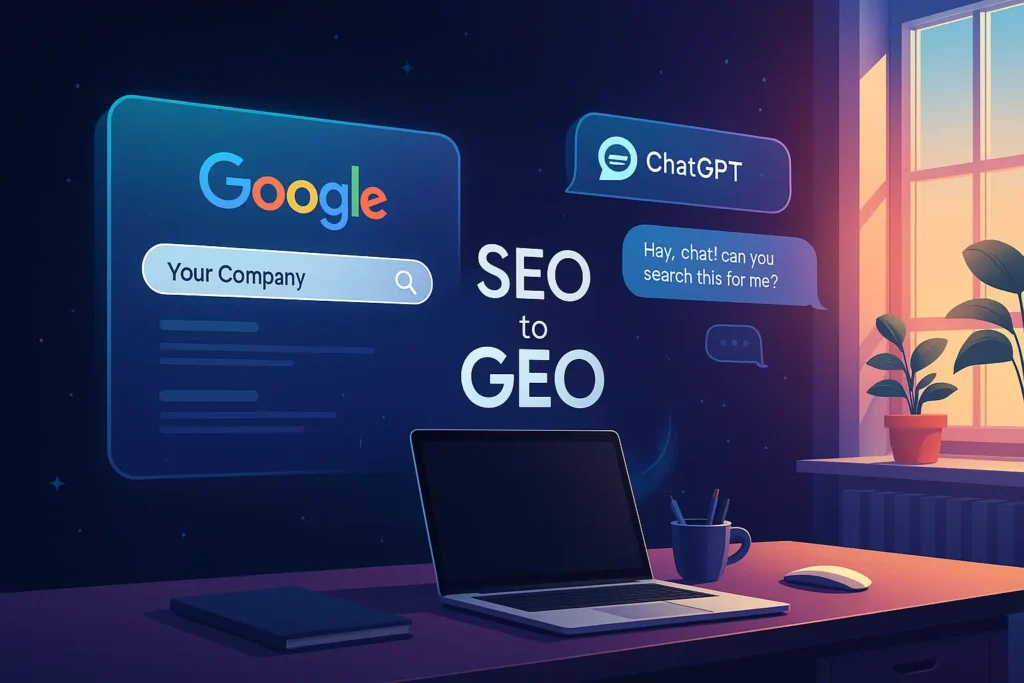
Generative engine optimization (GEO) is the process of optimizing content on web pages with the goal of ensuring it is properly displayed in AI-driven search engines, e.g ChatGPT, Perplexity, Gemini, Copilot, and others—including tools like an AI image generator.
The main goal of GEO is to improve the visibility of a website within popular large language models (LLMs), enhance brand awareness online, increase organic traffic, and improve user experience and satisfaction across AI-driven platforms. There are many AI search engines, and you need to have a dedicated team of professionals that can boost your SEO on the most applicable search engines that directly connect to Google results.
Here are the top changes that you need to implement right now to switch from traditional SEO to dominant GEO:
- Brand mentions: Boost brand visibility by acquiring mentions/articles across high-authority, relevant websites to your niche. The more often your brand is mentioned on trusted platforms, the more likely Google will recognize it.
- Relevancy and content quality: Focus on delivering content that directly addresses user queries. Your website content should give direct answers to short queries online The more closely your content aligns with keywords in the model’s training data, the higher the chances of it being recommended.
- Domain authority: Build your business domain’s authority through quality backlinks from trusted sources, particularly from authoritative, niche-specific outlets.
- Reviews: By having active positive reviews across trusted platforms (e.g., Amazon, TrustPilot) you can improve your GEO ranking.
So, now after implementing all these changes you make sure that your brand is getting acquainted with AI search tendencies.
It’s About Full Queries, Rather Than Short Keywords, During The Google Search
‘’If three years ago, SEO specialists knew exactly what to implement in order to get rid of the ‘zero-clicks’ curse, now they indicate that different approaches need to be used, due to the spike of AI searches’’
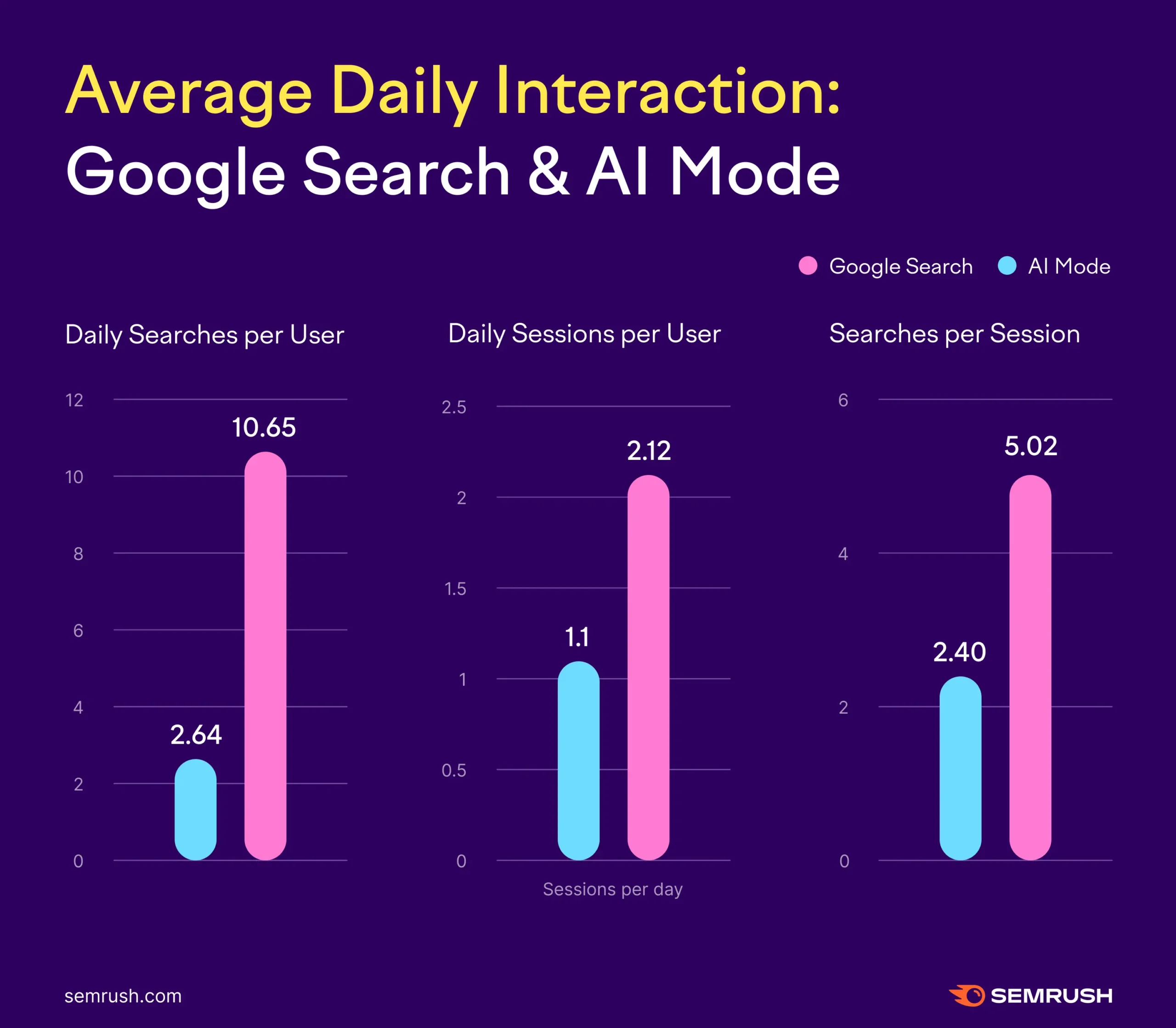
And the main factor is: humans. They do not search the way they used to. If previously, it was just a simple pair of keywords, e.g. “best headphones” and scrolling through links, now, they type full questions like “What are the best wireless headphones under $200 for working out available in my area?”.Basically, all the SEO tips are used by the users themselves, rather than the algorithms.
If at the beginning of 2010s, users were only indicating keywords to find the answer to their search, now question-based searches exploded in the past year, jumping from less than half of queries to nearly 90 percent. And this happened right after Google released its AI summaries feature. And it’s pretty normal, because people want everything to be as close to ChatGPT as possible. These trends only mean one thing, business owners should not be scared of them, but learn how to navigate them, more specifically SERPs *search engine result pages):
- Restructure your website data: Make sure that your website has structured data ensures that Google pulls the correct (and highly desirable takeaways for your business) into SERPs.
- Answer the questions on your website directly: The goal of introducing AI Overviews was to refine search and make information more accessible, so it means your brand should be concise and provide direct answers in your content that will help search engines provide a positive experience in SERPs.
- FAQ important as never before–We highly recommend to ask your customer service team or sales team for a list of questions leads or prospective customers often ask, this highlights an opportunity to write unique content and earn trust in your brand.
The AI Google optimization is an ongoing process as the tracking of your metrics need to be done frequently, with Intactdia’s innovative approach in SERPs optimization, your online business presence will be the top destination of its niche globally in all AI search engines.
New Era-New Google AI Mode Metrics
‘’If businesses would like to succeed in current searches, the AI metrics should be their top tools.’’
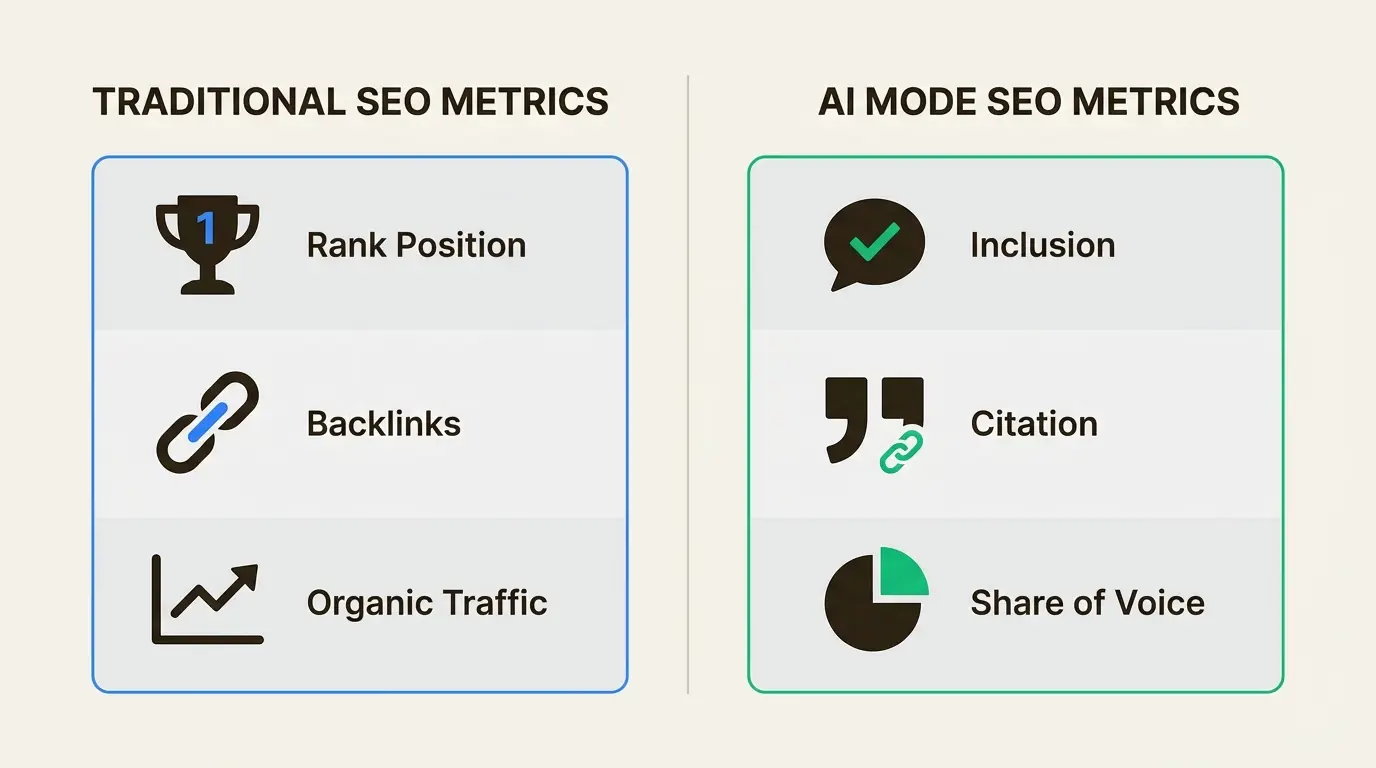
For now in Google space, brand owners can forget about the traditional SEO metrics like keyword rankings and click-through rates. They become less relevant in an AI Mode world. The only metrics that you need to consider from now are the following and more:
- AI Citation Frequency-Calculate how often your content appears as a source in AI Mode responses
- AI Citation Frequency: The number of times your brand is cited as a source in AI-generated answers.
- Content Relevance: The effectiveness of specific, structured content chunks (e.g., FAQ sections, data tables) in being extracted by AI.
- User Intent Alignment: Calculate the percentage of visitors arriving through AI, which often leads to higher conversion rates (10–20% higher than traditional traffic) and more.
The indicated above metrics and many more help to boost the Google AI Mode representation of your business. It is highly recommended to check these statistics frequently as Google keep updating its AI features.
As we can see in 2026, ranking #1 on Google is no more a growth strategy, because your name will be behind the AI chosen brands.That means you need to be actively selected by any AI engines in order to be at the top positions in the search. Now you need not the rankings, but a usefulness strategy for your clients, because only with this key factor, you will be able to succeed in ever changing AI search.